


The ESK blog
Acne & The Hydroxy Acids: AHAs, BHAs and PHAs
15 June 2023
Dr Anne Thomson
Hydroxy acids describe a number of different chemical groups, which, apart from sharing some atomic similarities (for the chem nerds, they have a Carboxyl group in close proximity to a Hydroxyl group), also share the ability, when put on the skin, to exfoliate and hydrate.
The main groups that are talked about in skincare are Alpha, Beta and Poly Hydroxy acids.
Alpha hydroxy acids (AHAs)
AHAs break the bonds between corneocytes or superficial skin cells in the topmost layer of the skin- the stratum corneum.
This is how they help thin the stratum corneum (which sounds terrible but actually helps when thickened rough skin looks terrible).
Typical examples include glycolic, mandelic and lactic acids.
At the next level down, below the stratum corneum in the dermis, deeper in the skin, AHAs increase the skin’s glycosaminoglycans, a central building block of the skin, so in this layer, they actually increase the dermal thickness.
There is also some suggestion that AHAS help stimulate the production of collagen from the fibroblast cells.
In acne specifically they are gentle exfoliators, helping to break down pimples while also helping retinoids like retinaldehyde improve their absorption in the skin.
AHAs also help stop your skin from making too much pigment as well as helping get rid of excess pigment from the upper layers of the skin.
Given that post inflammatory pigmentation can be a nasty reminder of a pimple ages after it has cleared up, this is a great additional benefit.
Downsides of AHAs
The Food and Drug Administration in the USA has logged burning, dermatitis or rash, swelling, pigmentation, blisters, welts, skin peeling, itching and increased sunburn as side effects, especially after in clinic high dose peels.
They can’t be used by people with sensitive skin, including people with rosacea.
In general the risk of irritation is related to the concentration and type of AHA. The smaller the hydroxy acid, the more easily it penetrates the skin and the more effective it is expected to be.
But the potential for irritation is also generally related to the size, with smaller hydroxy acids being potentially more irritating.
Glycolic acid is the smallest hydroxy acid, then Lactic acid, Malic acid, Tartaric acid, Mandelic acid and Citric Acid. Glyolic and Lactic are the best studied AHA’s and have the best evidence.
How to get your AHAs for acne prone skin
It is quite common to see cleansers formulated including AHAs and dermatologists often recommend them, even though there’s not much evidence to support this.
They can’t hurt.
There is much more evidence for a leave on preparation.
In low concentrations , AHAs are common in over-the-counter leave-on gentle exfoliators. You can also find them in peels.
In high concentrations (>20%), these preparations are used as chemical peels to treat acne, as well as other skin problems like psoriasis, and photoaging, but they are for use in clinic only and need to be washed off after a few minutes.
Smooth Serum is a night treatment formulated with 3% Glycolic acid, 1% Lactic acid, and 1% Gluconolactone. This gentle AHA blend supports the appearance of skin texture and surface renewal, helping maintain the look of even skin tone. Caution: Not recommended for very sensitive skin or skin prone to rosacea.
Smooth Serum
Key features:
Is more better?
In our experience, most leave-on products (the type you use at home) with AHA concentrations above 5% would have a pH which is too low and require alkali buffers to increase the product pH.
Most commonly, Aluminium, Potassium or Sodium Hydroxide are used for the job. Not only do they increase the product pH, but on a pound for pound basis, they also reduce the effectiveness of the AHAs and are potentially irritating to the skin too!
So this is a case where (above a concentration of say 5%), more really is not better.
Polyhydroxy acids (PHAs)
A “new generation” of AHAs, PHAS provide similar effects as AHAs but do not cause the irritation of classical AHAs. Typical examples include gluconolactone or lactobionic acid.
PHAs have been less well studied than AHAs but studies have been successfully done on acne, either alone or in combination with other AHAs or Vitamin A. In small studies, PHAs have awesome moisturizing properties, too.
Downsides of PHAs
These are very well tolerated, including in sensitive and rosacea prone skin. But there is less evidence in this space than there is for the other hydroxy acids.
How to get your PHAs for acne prone skin
These days, many leave on Hydroxy Acid serums including Evidence Skincare’s very own Smooth Serum contain PHAs. They can also be used as a peel in a clinic.
Beta hydroxy acids (BHAs)
Beta hydroxy acids are atomically similar to alpha hydroxy acids.
In fact, some AHA’s also satisfy the chemical requirements to be considered BHA’s too eg. Citric and Malic acid
If you have heard that salicylic acid isn’t really a true BHA, that’s because it isn’t! Chemists Yu and Van Scott classified it as a phenolic aromatic acid.
But most dermatologists don’t get caught up in chemistry semantics anymore and most studies and well pretty much everyone refers to salicylic acid as a BHA...Which is what I am going to do here.
There is GREAT evidence for salicylic acid as a gentle exfoliator of the skin.
It is effective in managing acne, with one study of acne patients finding that in just 4 weeks, 95% of patients improved: 20% had complete clearing, 30% had significantly improved, 15% had moderate improvement, 30% had mild improved.
Being related to aspirin, salicylic acid has anti-inflammatory and anti-microbial properties and it is usually super well tolerated.
Our Hydroxy Overnight Mask is your go-to for clearer, glowing skin! With 5% salicylic acid and 10% urea, it’s a powerful yet gentle way to take on blemishes and keep skin hydrated. In oiler skin, Salicylic acid gently exfoliates for a smooth finish, while urea deeply moisturises. Use it as a spot treatment, or apply it once a week for an all-over refresh. Just cleanse, apply, and let this overnight mask work its magic while you sleep—wake up to softer, clearer, and radiant skin ready to take on the day!
Hydroxy Overnight Mask
Featuring;
- Gentle exfoliators for a weekly skin refresh
- Convenient size means you can keep it on hand to tackle blemishes when and wherever they happen
Downsides of BHAs
Skin irritation from BHAs is very rare. We have perhaps only one handful cases of this here at ESK Evidence Skincare.
How to get your BHAs for acne prone skin
It is quite common to see cleansers formulated including BHAs and dermatologists often recommend them to my patients, despite the fact that there’s not much evidence to support this. They can’t hurt.
Better is a leave on application. There is evidence for salicylic acid at concentrations of between 0.05% and 5%, although studies suggest the higher end of that range is preferable with more powerful effects.
BHAs can also be used as a peel at a dermatologist or dermal therapist’s clinic. They tend to be used at a 30% concentration and repeated every 2 weeks or so.
Finally, new technological advances has allowed BHAs to be incorporated into dissolving microneedle patches.
Studies show that these BHA loaded patches can be used daily without side effects and that they result in fewer, less red and angry pimples.
They are most effective when used at the early stages of a pimple but are also effective against larger pimples as well.
Microneedle patches. Our Spotless Patches are your new go-to for tackling early-stage bumps, right from home! Each pack includes 8 patches, each patch packed with 300 dissolving, painless Hyaluronic Acid microneedles. These microneedles deliver a potent blend of ingredients like salicylic acid, vitamin B3, tea tree oil, and green tea directly to the spot. This powerful formula works to calm and clear the skin and helps you stop bumps in their tracks. Keep a pack on hand for a quick, targeted solution that’s easy, effective, and skin-friendly. Say goodbye to surprise unwanted blemishes and hello to clear, confident skin! Featuring; Each pack contains 8 patches. Each patch is single use.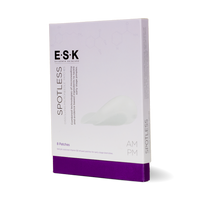
Spotless: Microneedle Patches