
The ESK blog
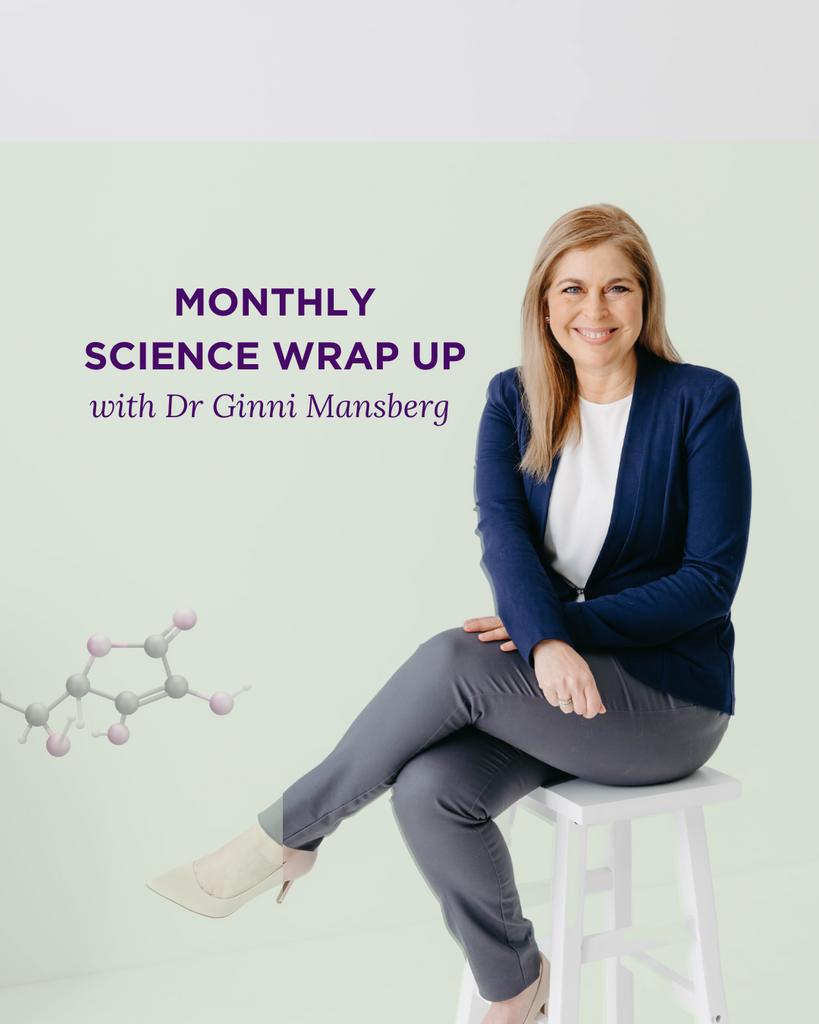
May 2026 Science Wrap Up
28 May 2026
Written by Dr. Ginni Mansberg
Hello there! It’s the end of May and we are back in Sydney. We spent most of May shuttling between Las Vegas (our US base) and London. In London once again we represented ESK at the HUUUGE Aesthetic Medicine London conference. This time the conference combined with BAMAN (British Association of Medical Aesthetic Nurses.) Flying the flag for ESK, the incredible Dr Kai from Manchester delivered a brilliant lecture on pigmentation in skin of colour and once again it was a great opportunity to network with the best in the business. Coming home early to be with my mum who is unwell, I was happy to be back to my lovely patients, my fav podcast sisters (if you haven’t subscribed to Unleashed please do!) and to Channel 7! And to scouring journals once again! Here are a few that stood out!
Microbiome altering skincare - a bit woo woo
The skin microbiome has become the skincare industry’s favourite buzzword, but a new review published in the journal, Skin Research and Technology reminds us to separate science from storytelling. This paper explores how cosmetic products interact with the skin’s complex microbial ecosystem, which plays a critical role in barrier function, immune regulation, and inflammation. Disruption of this balance (dysbiosis) is linked to conditions like acne and atopic dermatitis, so the idea of “microbiome-friendly” skincare is appealing. And running wild on TikTok.
Most conventional skincare products, when well-formulated, don’t significantly disrupt the microbiome. Studies show that common ingredients like preservatives and actives generally maintain microbial diversity, especially when pH is kept in the skin-friendly range of ~4.5–5.5. But the researchers looked at newer formulations containing prebiotics, probiotics, and postbiotics. Some early studies suggest these may improve hydration, barrier function, and even reduce inflammatory bacteria but the evidence is often based on small, short-term industry sponsored trials with variable (even questionable) methodology. That’s not so much evidence but more like marketing!
The key takeaway is that the microbiome is less like a garden you can easily “plant” and more like a rainforest. It’s complex, dynamic, and not easily engineered. While microbiome-targeted skincare is promising, claims currently outpace the evidence, and there’s no standard definition of what “microbiome-friendly” actually means.
For now, the fundamentals still win: support your skin barrier, respect skin pH, and avoid unnecessary irritation. The microbiome will usually take care of itself.
HA serums rule! As the first layer in your skincare routine, anyway!
We love a hero product in skincare! You know- that one serum to rule them all. But a new 2026 US study in the International Journal of Cosmetic Science is a good reminder that skin doesn’t work that way. This randomised clinical trial of 124 adults looked at what happens when you use a hyaluronic acid serum alone, a moisturiser alone, or both together, and the results were VERY clear. All three improved hydration at the 30-minute mark. No surprises there. But after 8 hours, only the combination routine was still significantly outperforming the others. In other words, layering worked, and single products didn’t go the distance.
Why? It comes down to basic skin physiology. Humectants like hyaluronic acid pull water into the skin. But without something on top to seal it in, that hydration doesn’t last. Moisturisers, on the other hand, help reduce water loss, but don’t actively draw water in.
So, when you combine the two, you get the best of both worlds: more water in, and less water out. Interestingly, the combination routine also kept skin surface lipids more stable over time, rather than overshooting (which you sometimes see with moisturisers alone). And participants in the study reported their skin felt more hydrated both immediately and throughout the day with the product combo.
They didn’t compare this to a combo of a vitamin C serum and a moisturiser. Personally I use all 3! HA followed by my fav C serum and then a moisturizer. And then top it all off with my fav zinc based SPF!
This study was not groundbreaking, but a nice, evidence-based reminder that in skincare, layering isn’t just marketing… It's physiology. And that a good HA serum is a good idea!
Our Hydraboost Hyaluronic Acid Serum is designed to provide deep, lasting hydration with a blend of high, medium, and low molecular weight hyaluronic acids (HA). High molecular weight HA sits on the skin’s surface, creating a protective hydration layer that feels smooth and instantly refreshing. Meanwhile, low and medium molecular weight HA molecules sink deeper, boosting hydration within the skin barrier. Studies suggest that low molecular weight HA can reduce the appearance of wrinkles and fine lines. Lightweight and versatile, Hydraboost is perfect for daily use as the first step in your routine for plump, hydrated skin.
Hydraboost HA Serum
Featuring
- Enhanced daily skin hydration
- Plumper, healthier feeling skin
Pigmentation- a new player in the mix
We talk a lot about pigmentation, collagen, antioxidants… but here’s a curveball: a new review published in the International Journal of Women’s Dermatology suggests we may have been overlooking something surprisingly basic; iron. Yes, the same iron we usually worry about being too low might also be quietly contributing to skin aging, uneven tone, and photoaging when levels build up in the skin.
It turns out that iron is a bit of a double agent. It’s essential for life, but it’s also very good at generating reactive oxygen species (the troublemakers behind oxidative stress). And unlike many other factors, iron doesn’t just come and go. In fact, it can hang around in the skin for up to 60 days, which is twice the normal skin turnover cycle.
That means more time to fuel oxidative damage, collagen breakdown, and potentially those dull, uneven tones we often blame purely on melanin. The review also suggests iron may play a role in photoaging in a slightly different way than we thought. UV exposure doesn’t just create free radicals. It can actually release iron from storage proteins in the skin, amplifying the oxidative cascade and ramping up collagen-degrading enzymes.
There are even hints this might help explain things we see clinically, like worsening pigmentation in pregnancy or menopause, where iron levels shift significantly. Now, before we all start panic-Googling iron detoxes, this is early, largely theory at this stage. We don’t yet have strong clinical trials proving cause and effect.
But if the new research holds true, it opens up a whole new way of thinking about skin aging.
For now? Consider this one to watch! A reminder that sometimes the biggest clues in skin biology are hiding in plain sight. By the way, the same theory is being explored in brain aging. Check out my book Save Your Brain for the DL on that one!
See you next month!
The Pigmentation Kit combines evidence-based ingredients designed to support a refreshed skin and a more even skin tone while restoring hydration. Key features: Retinal is not suitable for use during pregnancy or while trying to conceive. We've swapped Ultimate A with the new Ultimate A Gold. If you prefer Ultimate A, you can build your own kit here.
Pigmentation Kit
C Forte can exacerbate acne and may be too strong for irritable skin.